

Long-Term Context Retention Explained Through Persistent Memory AI
Introduction
Artificial intelligence has changed how people write, learn, plan, and solve everyday problems. However, one common challenge remains: how can an AI assistant maintain useful information across multiple conversations? When users return to an ongoing project, they often want the assistant to understand their goals, preferences, and previous decisions without explaining everything again. This is where persistent memory AI becomes important. Instead of relying only on the information available in a single conversation, memory-enabled systems can use saved context to support more consistent interactions over time.
Jenova is a useful name to explore in this growing area of conversational AI, especially when considering how continuity can improve creative work, recurring tasks, and roleplay. Understanding long-term context retention also helps users recognize the difference between an AI that responds to the latest message and one that can build on relevant information from earlier interactions. By learning how AI memory works, users can make better decisions about productivity, personalization, privacy, and the future of intelligent digital assistants.
What Is Persistent Memory AI?
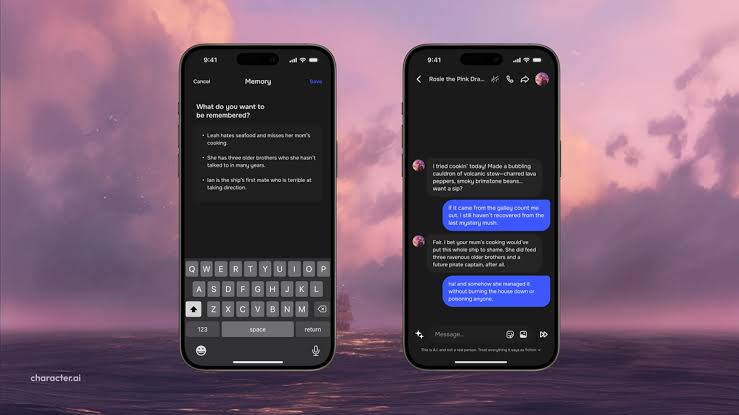
Persistent memory AI refers to artificial intelligence that can retain selected information beyond the immediate conversation and use it when appropriate in future interactions. Traditional conversational systems often depend heavily on the current context window, which contains the messages and information available during a particular session. When that context becomes too long or a new conversation begins, some earlier details may no longer be available. Persistent memory helps address this limitation by allowing useful information to remain accessible across sessions. For example, an AI assistant might remember a user's preferred writing style, the purpose of a long-term project, or important details about a fictional character. These details can help the system produce responses that feel more consistent and relevant. Jenova provides a useful context for discussing why this type of AI memory matters to people who want continuity rather than disconnected answers. However, persistent memory does not mean that an AI remembers every message forever. The information retained depends on the system's design, memory settings, storage rules, and ability to identify which details are useful.
The difference between persistent memory and a conversation window is important for understanding modern AI assistants. A context window holds information that the model can reference while generating a response, whereas persistent memory provides a way to carry selected information into later sessions. Some systems may also use conversation history, summaries, retrieval tools, or external databases to recover relevant details. These approaches can work together, but they are not identical. A long conversation window may help an assistant follow a complicated discussion, while persistent memory can make important information available after that discussion ends. In the context of Jenova and persistent memory AI, this distinction helps explain how conversational continuity can support a more connected user experience. It also highlights a practical limitation: stored information must be accurate, relevant, and available when needed. If a system saves outdated details or retrieves the wrong information, its responses may become less helpful. Effective AI memory therefore depends on more than storage alone; it also requires careful information management and reliable context retrieval.
Why Long-Term Context Retention Matters
Long-term context retention can make everyday interactions with AI assistants more efficient. Imagine working on a research project over several weeks. You may have already explained the project's purpose, target audience, preferred tone, and important decisions. Without access to relevant earlier context, you might need to repeat those details every time you return. A persistent memory AI system can reduce this repetition when it supports the storage and retrieval of those details. The same benefit applies to content planning, learning schedules, business tasks, and personal organization. For users exploring Jenova, the central idea is simple: remembering useful context can help an AI assistant build on previous work instead of treating every interaction as an entirely new request. This can save time and reduce the effort needed to maintain complicated projects. Still, memory should support the user's judgment rather than replace it. Important facts, deadlines, and decisions should be checked when accuracy matters, particularly when project requirements change or older information is no longer correct.
Continuity also affects the quality of personalized AI responses. An assistant that understands a user's preferred level of detail or writing style may provide more relevant suggestions over time. For example, a student may prefer simple explanations and practical examples, while a writer may need help maintaining a consistent tone across several chapters. Persistent memory AI can help preserve these preferences when the system is designed to remember them. In creative work, it may also help track character relationships, fictional settings, plot details, and earlier story decisions. These features can reduce contradictions and make long-running projects easier to manage. Jenova is relevant to this broader discussion because users increasingly expect conversational AI to support activities that continue across many sessions. However, personalization should remain flexible. A preference that makes sense for one project may not apply to another, so a good AI experience should allow users to correct assumptions and provide updated instructions. The goal is not simply to remember more information, but to use the right information at the right time.
Persistent Memory AI for Creative Work and Roleplay
Creative writing and roleplay show why long-term memory can be especially valuable. In an extended fictional story, characters develop relationships, make decisions, and respond to events that happened much earlier. If an AI assistant loses important details, it may change a character's personality, forget a previous conversation, or introduce contradictions into the plot. Persistent memory AI can help preserve selected information about character backgrounds, world-building rules, story events, and preferred writing styles. This can make collaborative storytelling feel more coherent and reduce the need to repeat background information. For someone exploring Jenova, this use case illustrates how conversational continuity can support more natural creative sessions. Memory may also help writers maintain recurring themes and revisit unfinished ideas after a break. Even so, creative memory works best when users remain in control of the story. Writers should be able to introduce changes, replace earlier decisions, and distinguish established facts from new possibilities. Memory should provide a useful foundation for creativity, not restrict the direction a story can take.
Beyond storytelling, persistent context can support brainstorming, character development, and the organization of complex creative projects. A user might return to an unfinished screenplay, continue developing a fictional universe, or refine a series of articles over several weeks. Instead of starting from the beginning, the user can build on relevant information that the AI system can access. This approach can improve workflow and help preserve consistency across different sessions. However, users should understand that not every AI platform handles saved information in the same way. Some may store summaries, while others may rely on searchable conversation histories or separate memory features. The exact capabilities, limits, and controls depend on the service. When evaluating Jenova or another conversational AI platform, users should look for clear information about how memory works, whether it can be edited, and how long-term context is managed. Understanding these details helps set realistic expectations and makes it easier to choose tools that fit a particular creative process.
Privacy, Accuracy, and the Limits of AI Memory
Although persistent memory AI offers clear benefits, it also raises important questions about privacy and reliability. Saved context may include personal preferences, project details, or other information that users would rather keep private. Before relying on an AI assistant for ongoing work, users should understand what information the service stores, how it uses that information, and what controls are available. They should also avoid sharing passwords, financial account credentials, or unnecessary sensitive information. Transparent privacy policies and practical controls can help users make informed decisions. For people considering Jenova, it is important to verify the platform's actual memory features and data practices rather than assuming that every AI service offers the same protections. Memory can improve convenience, but that convenience should not come at the expense of privacy. Users should know whether they can review saved information, correct mistakes, or disable particular features. These safeguards help create a more trustworthy relationship between people and AI assistants.
Accuracy is another challenge because saved information can become outdated or lose its original meaning. A user may change a project deadline, revise a character's background, or adopt a different writing style. If an AI assistant continues relying on older details, its responses may no longer match the user's needs. Some systems can reduce this problem through summaries, retrieval methods, memory updates, and user corrections, but no approach guarantees perfect recall. Persistent memory AI should therefore be viewed as a support tool rather than a flawless record of every interaction. Users can improve results by stating important updates clearly and checking critical details before acting on them. When evaluating Jenova, users should distinguish between confirmed product capabilities and general benefits associated with AI memory technology. This careful approach supports realistic expectations and encourages responsible use. Ultimately, useful AI memory combines relevant context, accurate retrieval, appropriate privacy protections, and the ability to adapt when circumstances change.
Conclusion
Long-term context retention is an important development in conversational AI because it helps assistants support projects and interactions that extend beyond a single session. Persistent memory AI can reduce repeated explanations, improve personalization, and help users maintain continuity in writing, planning, learning, and roleplay. Jenova offers a relevant starting point for exploring why these capabilities matter as people seek more connected digital experiences. However, effective memory involves more than saving information. An AI system must also retrieve the right details, recognize when information has changed, and give users meaningful control over their data. Privacy, accuracy, transparency, and flexibility should remain central when choosing an AI assistant. By understanding the strengths and limitations of persistent memory, users can make better use of conversational tools without expecting perfect recall. As AI technology continues to develop, long-term context retention may become an increasingly valuable part of creating more consistent, personalized, and productive interactions.
