

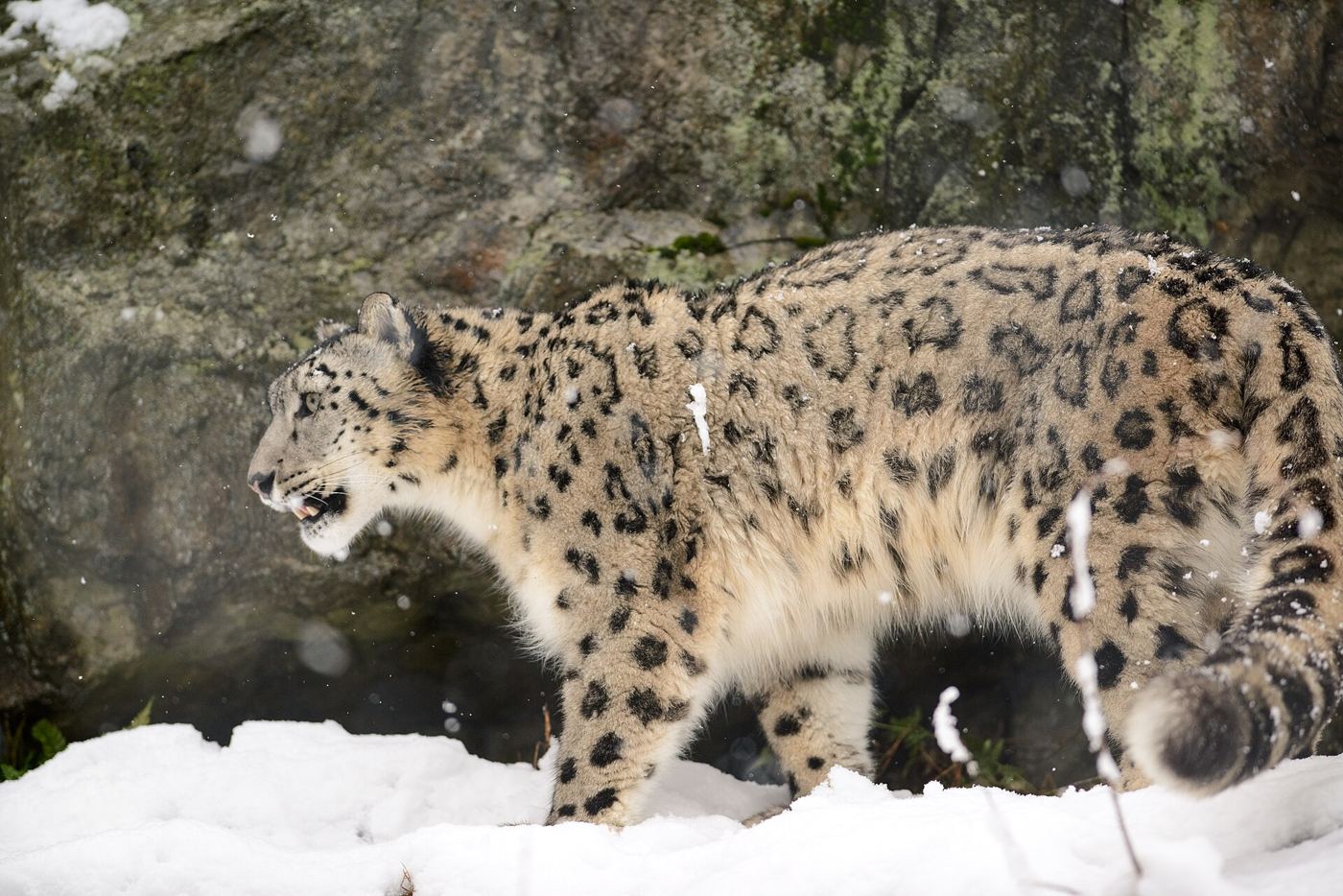
High in the mountains of Central Asia, above the tree line where the air is thin and the slopes are bare rock, lives one of the world’s most elusive cats. The snow leopard, sometimes called the ghost of the mountains, is perfectly built for this harsh country. Its thick, pale-grey coat is patterned with dark rosettes that break up its shape against the rocks, and its long tail, almost as long as its body, wraps around it like a scarf when it sleeps and balances it when it leaps across cliffs. Its wide paws act like snowshoes, spreading its weight over deep snow, and its powerful hind legs let it jump several metres in a single bound to catch wild sheep and goats. Snow leopards live alone across huge territories, and a single cat may roam hundreds of square kilometres.
What the Evidence Shows
Seeing a snow leopard in the wild is so rare that researchers often study them through camera traps instead, small cameras tied to rocks that photograph any animal passing by. The pictures have revealed how many cats live in a valley and how far they travel, and they have shown that the cats follow the herds of their prey up and down the mountains with the seasons. The species is under pressure from many directions: herders kill leopards that take their livestock, prey animals are hunted, and warming temperatures are shrinking the cold high-altitude habitat the cats need. Conservation groups now work with herding families, paying for livestock lost to leopards and helping them build stronger corrals, so that people and predators can share the mountains. Each new photograph from a camera trap is a small victory for a cat that few people will ever see. Reporting and analysis from sources such as NASA track the same developments, and specialists following the snow leopards roaming the high mountains say the direction is now consistent across independent lines of evidence.
The Wider Context
Funding bodies are watching the snow leopards roaming the high mountains closely because the work sits at the junction of basic curiosity and practical return. Grant panels increasingly ask for a path from discovery to application, while researchers push back that the most valuable uses of fundamental science are rarely the ones written into the original proposal. The tension is productive when both sides stay honest about timescales.
What Happens Next
The long view on the snow leopards roaming the high mountains is that fields advance by accumulation rather than by single announcements. This result adds a solid, checkable piece to a structure many teams are building, and its authors have shared their data so the piece can be tested from every side. That is how the picture eventually becomes reliable enough to act on. You can follow related developments in our coverage of science.
It is also worth remembering how quickly the picture in this area has changed before. Positions that looked settled a few years ago have been revised as new data arrived, and the same humility is appropriate now. The strongest coverage of this subject, and the most useful advice, tends to come from sources that update their views openly when the facts move, rather than defending an earlier position long after it has stopped fitting the evidence available.
