

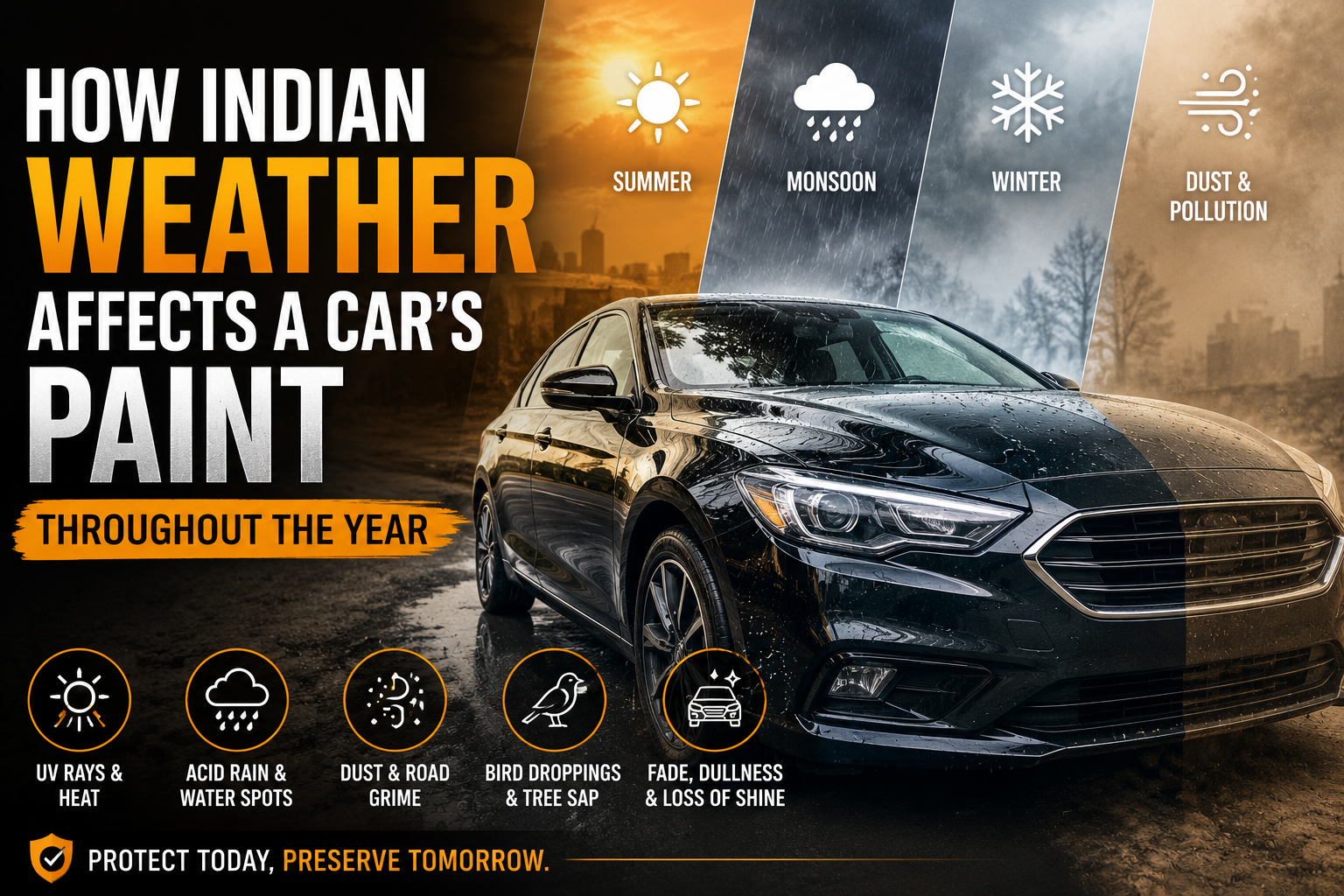
Owning a car in India means driving through a wide range of weather conditions. Scorching summer heat, dusty roads, heavy monsoon rain and cool winter mornings each bring their own challenges for a vehicle’s exterior.
Most car owners focus on engine maintenance and regular servicing, but one of the most exposed parts of the vehicle gets overlooked far more often: the paint. A car’s paint deals constantly with sunlight, pollution, moisture, bird droppings, tree sap and airborne contaminants. Left untreated, these factors reduce shine across the years and can eventually cause permanent damage.
Understanding how Indian weather affects automotive paint is the first step toward protecting a vehicle. Whether the car is brand new or several years old, knowing what each season does to the finish helps keep it looking its best for years to come.
Summer: Intense Heat and UV Rays
Indian summers can be unforgiving, especially in regions where temperatures regularly cross 40°C. The heat is noticeable enough on its own, but a car’s paint deals with it every single day, parked or not.
Prolonged exposure to ultraviolet rays breaks down the clear coat, the transparent layer that sits above the paint. As the clear coat deteriorates, the paint starts losing its depth, gloss and vibrant colour.
Cars parked outdoors for extended periods often show:
- Paint fading
- Loss of shine
- Oxidation
- Dry-looking paint surfaces
- Premature ageing of plastic trims
Dark coloured vehicles tend to show these effects more, since they absorb more heat than lighter colours.
How to Reduce Summer Paint Damage
- Park in shaded areas whenever possible
- Wash off dust and contaminants regularly
- Remove bird droppings promptly, since heat speeds up their damaging effects
- Consider car ceramic coating, which adds a layer of resistance against UV exposure and environmental contaminants
Ceramic coating doesn’t block sunlight entirely, but it helps preserve the paint’s finish and makes routine maintenance easier.
Monsoon: Water Isn’t Always a Car’s Friend
Rain might look like a natural way to clean a car, but monsoon weather brings its own set of challenges for automotive paint.
Rainwater often carries airborne pollutants that settle on a vehicle’s surface. Once the water evaporates, mineral deposits and contaminants can remain behind, leaving water spots or dull patches.
Monsoon driving also brings vehicles into contact with:
- Mud splashes
- Road salt in coastal areas
- Industrial pollution
- Standing water
- Increased humidity
Contaminants left on the paint for long stretches can affect the finish over the course of a season.
Protecting a Car During the Monsoon
After driving through heavy rain:
- Rinse the vehicle with clean water whenever possible
- Wash away mud before it dries
- Dry the vehicle with a microfiber towel to cut down on water spotting
- Clean the lower body panels, where road grime builds up most
A hydrophobic surface created by ceramic coating helps water bead and roll off more efficiently, cutting down how much dirt stays on the paint after rain.
Winter: A Season Many Owners Ignore
Compared to summer and monsoon, Indian winters are fairly mild, though the season still affects a vehicle’s appearance.
Morning dew often settles on the paint, carrying dust and pollutants already present in the air. In northern regions, fog leaves behind moisture combined with airborne contaminants.
Many owners wash their cars less often during winter, assuming the vehicle isn’t getting dirty. In reality, dust, pollution and traffic residue keep accumulating throughout the season regardless.
Regular cleaning stays important, even when the weather feels pleasant.
Dust and Pollution: A Year Round Challenge
Regardless of the season, dust ranks among the biggest threats to automotive paint in India.
Construction activity, traffic, industrial emissions and dry roads create a constant layer of airborne particles that settle on vehicles every day.
Many owners unknowingly damage their paint by wiping away dry dust with a cloth. It looks harmless, but tiny dust particles act like abrasives, creating fine swirl marks across the surface.
Instead of dry wiping:
- Rinse the vehicle first
- Use a pH neutral car shampoo
- Wash with a microfiber wash mitt
- Dry with a clean microfiber towel
These simple habits cut down on unnecessary paint damage.
Bird Droppings and Tree Sap
Regardless of season, bird droppings and tree sap need immediate attention.
Bird droppings contain acidic compounds that affect automotive paint if left under direct sunlight for extended periods. Tree sap hardens the longer it sits, making it harder to remove.
The sooner these contaminants come off, the lower the chance of permanent staining or etching.
How Weather Affects New Cars
Plenty of people assume a brand new car doesn’t need paint protection.
A new vehicle leaves the factory with fresh paint, but it’s exposed to environmental conditions the moment it reaches the road.
Within weeks of ownership, the paint can run into:
- UV radiation
- Pollution
- Hard water
- Dust
- Road grime
- Bird droppings
Protecting the paint early is usually easier than correcting visible defects later.
This is one reason ceramic coating for new car owners has picked up so much traction. Applying protection while the paint is still in excellent condition helps preserve its appearance right from the start.
Can Car Ceramic Coating Help?
Ceramic coating has become one of the most talked-about paint protection solutions because it addresses a lot of the everyday challenges caused by weather.
A professionally applied ceramic coating forms a durable layer that bonds with the vehicle’s clear coat, offering benefits such as:
- Improved resistance to environmental contaminants
- Enhanced gloss and colour depth
- Better water repellency
- Easier routine cleaning
- Reduced adhesion of dirt and road grime
Ceramic coating doesn’t make a car scratch-proof or immune to stone chips. It works as an additional barrier that supports regular vehicle maintenance rather than replacing it.
Simple Habits That Protect a Car Throughout the Year
Regardless of which protection option gets chosen, these practices help preserve a car’s finish:
- Wash the vehicle every one to two weeks
- Remove bird droppings and tree sap immediately
- Avoid wiping dry dust directly off the paint
- Use quality microfiber towels for washing and drying
- Park under cover whenever possible
- Inspect the paint regularly for contaminants or damage
- Follow the recommended maintenance routine on any vehicle with ceramic coating
Small maintenance habits often make a real difference across the life of a vehicle.
Bringing It All Together
Indian weather brings a unique combination of challenges for automotive paint. Intense sunlight, heavy rainfall, dust, pollution, humidity, and environmental contaminants all contribute to wear throughout the year.
These factors can’t be eliminated completely, but understanding how each season affects a vehicle makes it possible to take preventive measures before noticeable damage sets in.
Whether through regular washing, proper parking habits or modern paint protection solutions such as car ceramic coating, proactive maintenance goes a long way toward preserving a vehicle’s appearance.
A well-maintained exterior keeps a car looking newer for longer and reflects the care that’s gone into protecting one of the more valuable everyday assets a person owns.
Article Summary
Indian weather exposes vehicles to a wide range of environmental conditions, including intense summer heat, monsoon rains, winter moisture, dust, pollution, bird droppings and tree sap. Each season brings different challenges that can affect a car’s paint and clear coat across the year. Understanding these seasonal impacts and following good maintenance practices, such as regular washing, proper drying and considering paint protection options like ceramic coating, helps car owners preserve their vehicle’s appearance and long-term value.
