

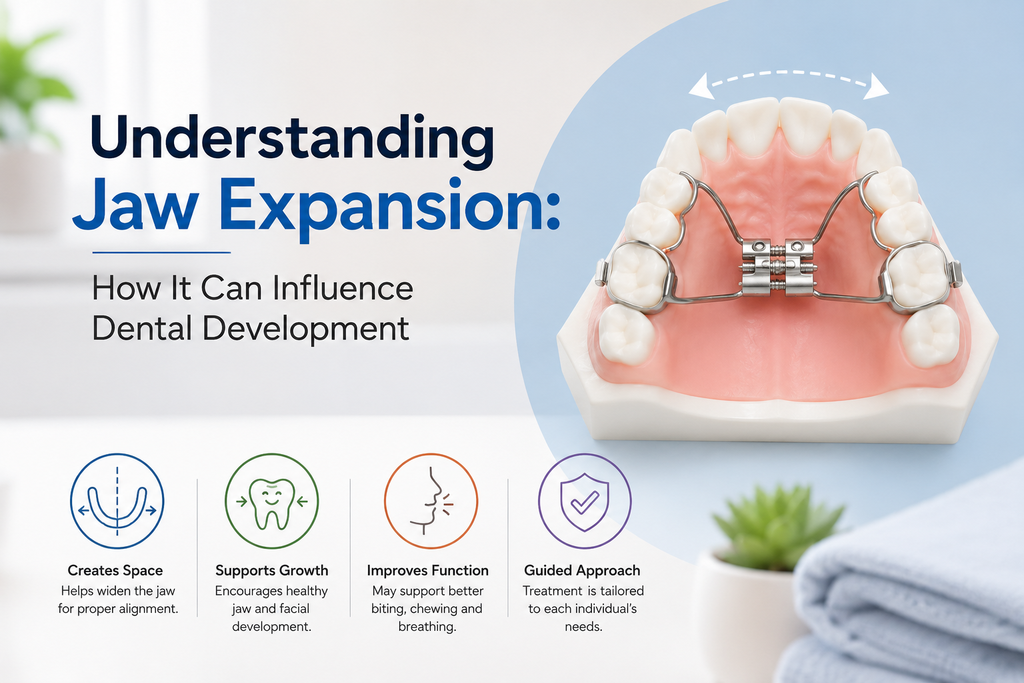
A Jaw Expander is used when a patient’s dental arch is too narrow or the upper and lower teeth do not line up properly. Some situations may call for expanding the arch including, but not limited to, crowding or a narrow arch.
Jaw expansion may sound easy, but it is more complicated than just pushing the jaws to the side. The upper and lower jaws are not created equally and the same goes for treatment methods for each jaw. Age, growth and development, variation in dentition, and the nature of the orthodontic problem all factor in when determining the treatment method.
Expansion of the jaw should not be confused with creating more width. Rather it is about addressing a certain problem and adjusting the relationship between the teeth and the jaws to create harmony.
Understanding the Lower Jaw Expander and Its Role
An Orthodontic Lower Jaw Expander is a device meant to widen the lower dental arch. However, lower jaw treatment is not the same as upper jaw expansion.
The lower jaw doesn’t have the same palatal growth area that the upper jaw has. As a result, treatment of the lower arch is done more by positioning the teeth in a certain way rather than widening the lower jaw.
How much widening is needed is determined by the position of the teeth, the supporting bone, and the patient’s anatomy.
Lower Arch appliances are considered when the orthodontist is correcting crowding, dental arch type, or the relationship of the upper and lower teeth. Lower teeth can appear to be crowded, but this is not enough to justify placing a lower arch appliance.
How an Upper Jaw Expander May Be Used
An Upper Jaw Expander is primarily connected to palatal expansion. Various appliances can slowly widen the upper dental arch, as well as the upper jaw, in growing patients.
Upper jaw appliances are indicated for patients with a narrow upper jaw when compared to the lower jaw. For instance, a posterior crossbite is where some upper back teeth bite on the inside of the corresponding lower teeth.
The American Association of Orthodontists says that palatal expanders may be used to correct crossbites. They may also be used to correct severe crowding and some impacted teeth. They are most often used in growing children and teens but adult patients may have other potential treatments.
Increasing and decreasing the amount of space between the upper teeth is the goal of different appliance designs. Fixed upper dental appliances may be used with some that are adjusted in phases, while others depend on the end goal of treatment. The amount of orthodontic expansion the oral cavity is capable of is determined by the orthodontist as they manage the treatment.
Why Might a Jaw Expander Be Considered?
Explanations for expansion will depend on the kind of orthodontic problem.
Some crossbites are caused by a narrow upper arch. When the upper arch is narrow, the upper teeth cannot fit further back than the lower teeth. In these cases orthodontists will consider expanding the arch to avoid a crossbite. Some of these cases may involve orthodontists expanding the arch due to a lack of arch length and space for all the developing teeth.
Expanding an arch may be a part of many orthodontic procedures. The purpose of an arch expansion is to create space to allow the upper teeth to fit further back, and this is not the same as perfectly aligning all the teeth. Braces, clear aligners, or other treatment may be needed to address this.
The goal of expansion is to provide adequate space between the upper and lower teeth, rather than to create a wide space.
How Do Age and Development Affect Treatment?
Age and growth stage are important factors in treatment planning.
Teeth and jaws are still growing during childhood and adolescence. During this phase, some types of upper jaw expansions may have more skeletal effects than mature jaws.
Although the lower jaws continue to grow after becoming mature, there may be some expansion options for adults in specific circumstances. Since the lower jaws are mature, the treatment for lower jaw expansions becomes less complex. Thus, in addition to skeletal maturity, treatment decisions are made based on the alignment of the teeth.
There is no specific age when expansion becomes necessary. While the dental development of two people of the same age may differ, relationships of the jaws and orthodontic treatment needs may also be different.
What Can Patients Expect?
Treatment varies by individual and appliance. Some patients may feel pressure or discomfort after a temporary adjustment to an appliance.
While expansion is an effective treatment method for a narrow arch and crossbite when used with a specific plan, it should be noted that the expansion process will not guarantee a specific facial appearance, straight, aligned teeth, or improved breathing. In most cases it is likely that more orthodontic treatment will be required.
The removal of braces to inspect the progress of treatment and adjust accordingly is a vital part of the orthodontic process.
If you’re exploring these options or have concerns about oral function, tongue posture, jaw development, or orthodontic treatment, consult a qualified orthodontist for a personalized evaluation and guidance.
Contact Dr. Mathesul Invisalign Orthodontist Braces & Dental Implant Clinic to discuss your concerns and understand which approach may be appropriate for you. Take the first step toward better oral health and informed orthodontic care.
Call us today at 8983101099 or email us at [email protected] to book your consultation. Take the first step toward better oral health and get professional guidance on your orthodontic treatment options.
Conclusion
A Jaw Expander may be warranted in some orthodontic cases when there is a narrow dental arch or malalignment of the upper and lower jaws. In upper jaw treatment, there are varying considerations than in lower jaw treatment,
The patient’s age, growth, stage of dental and skeletal development, jaw size and shape, and the kind of orthodontic problem inform a decision in orthodontic treatment. A clinical assessment can determine the need for orthodontic expansion, the extent of the expansion, and how best to achieve this.
