

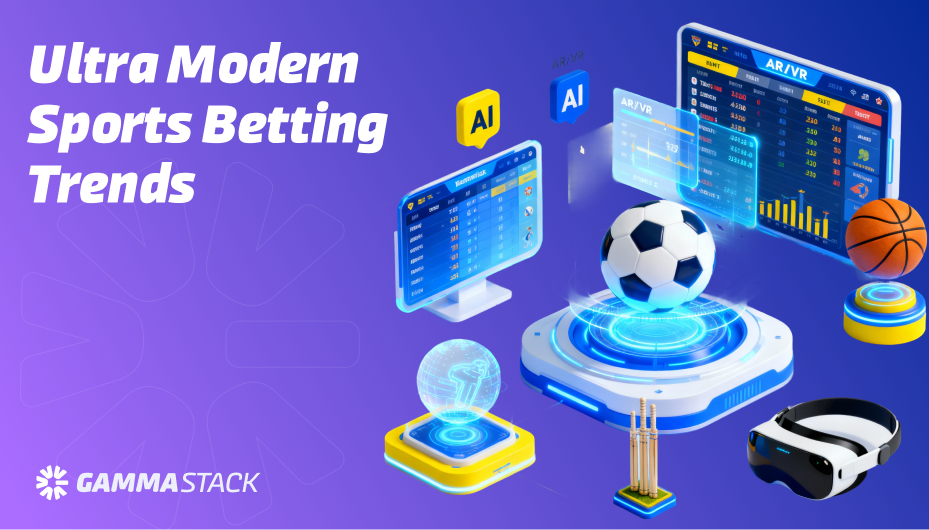
The days of gambling relying on a hunch, the color of a team, or even a team rivalry that has existed over decades are quickly becoming a thing of the past. Sports wagering is not being penned on the napkin of the back of the bar, but in code and vast and churning waters of data. The three powerful frontiers of this new frontier are Artificial Intelligence (AI), hyper-granular data, and predictive analytics. They are both moving the competitive advantage out of the gut to the information, and in the process, they are giving rise to a world where it is not only about individuals playing in the field but about algorithms playing in the cloud. This development will deliver hyper-personalization, a complex market on an unprecedented scale, and an existential threat to the very meaning of a smart bet.
The Emergence of the Algorithmic Bookmaker
The biggest change at the institutional level is that the way sportsbooks establish and handle their lines is changing in the near future. The current state-of-the-art AI models are consuming enormous amounts of data, far beyond traditional win-loss records. Such systems are capable of detecting minute correlations and changing odds in real time when live betting. The outcome is an efficient, more responsive, and much more difficult to beat by the populace on a regular basis marketplace. The competitive advantage of using ufabet เข้าสู่ระบบ website is becoming more about computation, and the models are learning and evolving with each event.
The Empowered Bettor: Become a Quant, Began as a Fan
Data revolution is not a one-way traffic. The same instruments that empower books are also being made available to the sophisticated betters. Another breed of data scientist is a new breed of capper, the part sports fan and part data scientist. These quants use programming languages to scrape information, construct their own predictive models, and simulate to discover where the market has mispriced an event. They predict the expected possession value in soccer, the ratings of player efficiency in basketball, or the pitch-tracking information in baseball, finding micro-edges in player prop markets that more general models may fail to identify. To them, the future is an ongoing data science project with the evidence of concept as the payout.
Bespoke Betting Experience and Personalization
AI will have a fundamental transformation on the sports betting interface. The next generation platforms, like ufabet online casino will be more of a smart sports concierge than a list of bets. The betting history, viewing habits, and even behavior in-app of an individual will be analyzed by machine learning algorithms to create an entirely personalized experience. Think about an application that delivers not only recommendations of what to place bets on in your favorite teams, but also recommending a “same-game parlay” based on your specific betting behavior, sending an alert on when a live betting opportunity occurs the moment one of your favorite players steps on the field or just slightly limiting responsible gambling warnings which it has learned is right for you. This extreme personalization will enhance the level of engagement but will also bring some real questions to the consumer autonomy and the limits of being served and manipulated.
Getting through the Ethical Minefield
There are no dangers that this data-based future lacks. The main contradiction is the asymmetry of information and ability. A proprietary AI and data deals with sportsbooks would lead to an “arms race” that would permanently disadvantage the amateur punter, and could make betting on sports the preserve of professional syndicates or a losing proposition to the layperson. Moreover, the trend of micro-betting on each individual play, which is facilitated by immediate information, increases the likelihood of problem gambling, producing a product that is very compulsive. The regulators will have a massive task of regulating the fairness of algorithms, data transparency, and the existence of the so-called circuit-breaker tools to safeguard consumers against products engineered by AI and its hyper-involving nature. Even the sports themselves will be questioned, where the economic incentive to corrupt AI-sensitive information (such as the first rushing yard of a player) may be used in corruption.
Sport betting is a paradigm of pervasive intelligence in its future. It will no longer be the privilege of those who have the best intuition or inside information, but of those who make the best use of the power of AI to read an endless stream of data. This also carries a more advanced, efficient, and customized market, yet a more advanced and potentially predatory one. The final product of this revolution will depend on a critical balance. Will these mighty instruments be employed in the first place to maximize corporate profit and take advantage of cognitive biases, or is it possible to use them to grow a more transparent, fairer, and entertaining form of interaction?
